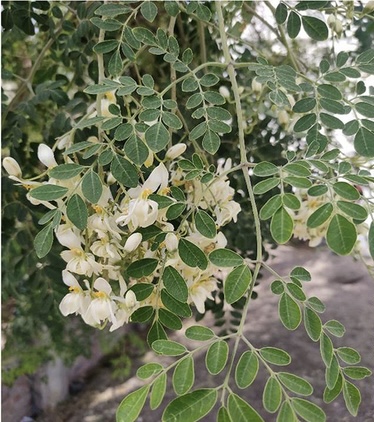
ASSESSMENT OF GROWTH PERFORMANCE IN BROILERS ROSS 308 DIETS SUPPLEMENTED WITH Moringa oleifera
Keywords:
Broiler, Feed conversion ratio, Feed intake, Growth performance, Moringa oleiferaAbstract
Broiler farming is a lucrative business for Bhutanese farmers. However, Bhutan has not achieved self-sufficiency in broiler meat probably because of fewer farmers take up broiler farming, small flock size, health related issues and high cost of production. A study was conducted to assess the effect of supplementing Moringa oleifera on the growth performance of ROSS 308 broiler. A total of 90-day-old chicks were randomly assigned into three groups with three replication each (10 chicks per replicate): no M. oleifera was provided (control, T0); 1.5 % (15g per 1 kg feed) supplemented with M. oleifera (treatment 1, T1); and 2.0% (20g per 1 kg feed) supplemented with M. oleifera (treatment 2, T2). There were slight significant differences between the average daily weight gain of chickens till week 5 among the groups (p<.439). At week 6, chickens assigned into T1 (121.86 ± 26.48g) and T2 (116.25±40.25g) gained higher weight than those in T0 (109.76±16.73g) at p<.05. Furthermore, chickens assigned into T1 gained the highest body weight than those chickens in T2 and T0 (p<.01). Moreover, the dressing percentage of the chickens was found higher in T1 group (78.13±13.48%), followed by T2 (77.9±13.48%) and control group (77.5±1.12%) (p<.01). These results suggest that supplementation of M. oleifera (with 15 g per 1 kg feed has slight effect in weight gain, average daily gain and dressing percentage. However, is has significant effect on feed intake and feed conversion ratio of broiler chickens. Therefore, its practical implication in field is not recommended. Further research is needed on its use in drinking water and across different broiler breeds.