FISH BIODIVERSITY AND DISTRIBUTION IN SUNKOSH RIVER TRIBUTARIES, BHUTAN: A BASELINE ASSESSMENT
Keywords:
Species richness, Environmental impact assessment, Lotic ecosystems, Bhutan, Himalayan rivers, Model rehabilitation program, Livelihood transformationAbstract
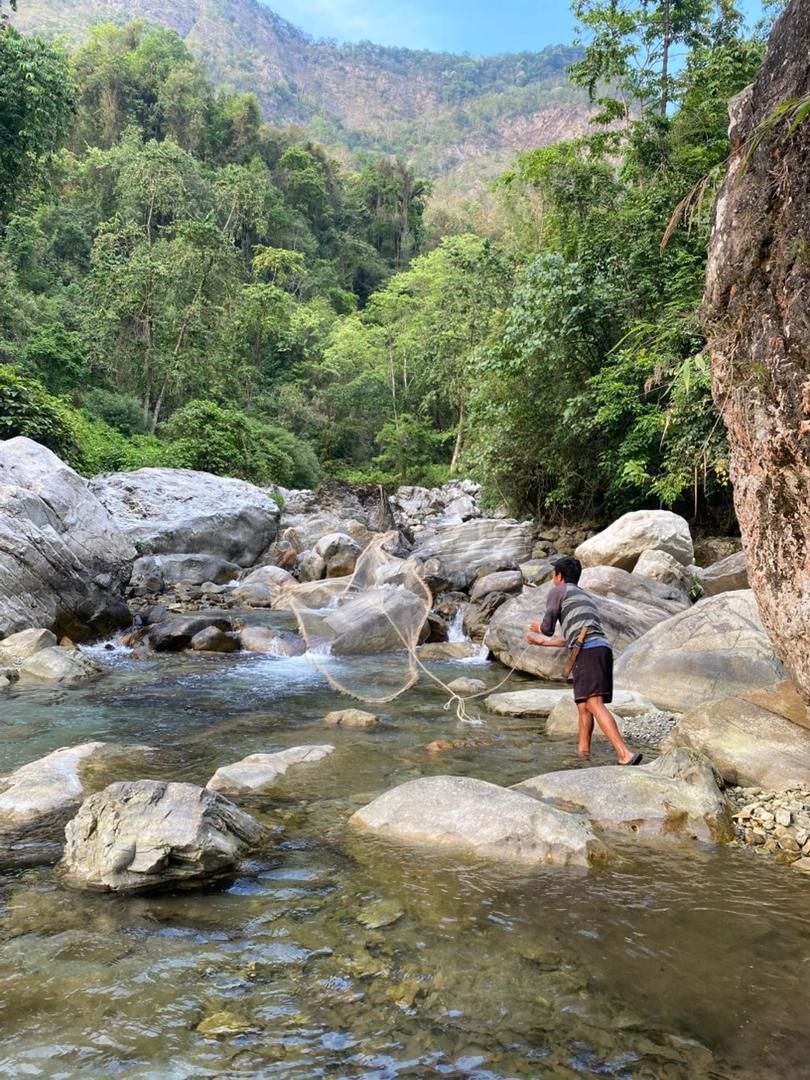
Baseline information on freshwater fish biodiversity is essential for effective Environmental Impact Assessment (EIA) and sustainable land-use planning. However, biodiversity data in Bhutan remain limited due to diverse reasons. This study assessed fish species composition and spatial distribution in selected tributaries of the Sunkosh River Basin in Tsirang District of Bhutan. Field surveys were conducted from 21 April to 10 May 2025 using a stratified, site-based sampling, by means of electrofishing and cast nets. A total of 274 fish individuals representing 17 species, 13 genera, four families, and two orders were recorded. Species richness varied markedly among sites, ranging from three species in Katley Khola to eleven species at the Kali Khola-Sunkosh confluence. This pattern indicates pronounced habitat heterogeneity and strong ecological connectivity. Neolissochilus hexagonolepis or commonly Chocolate Mahseer or Katley (in Bhutanese usage) was the most abundant species, followed by Ptychobarbus spp. (Snow trout/Snow carp) and Aborichthys spp., (Torrent loaches) while Garra spp. (Stone suckers or Sucker fish) showed wide spatial distribution across river systems. Notably, Tor putitora (Golden Mahseer or Sernya in locally), Semiplotus semiplotus (Kharpata or Assam carp), and Pterocryptis barakensis (Barak catfish) were recorded exclusively at the confluence zone, underscoring its conservation significance. One-way ANOVA revealed significant spatial variation in fish abundance among sampling sites for electrofishing and cast-net sampling (F₇,₁₆ = 4.37, p < 0.05), while diversity analysis using the Shannon-Wiener diversity index and Simpson diversity index indicated moderate to high fish diversity (Shannon: 0.76–2.23; Simpson: 0.44–0.89), with greater diversity in downstream and confluence habitat of sampling stations 4 to 5 (S4–S5) and lower diversity at sampling station 1 (S1) reflecting limited habitat complexity in the smaller Katley Khola stream. The study provides critical baseline data to support environmental clearance, impact mitigation, and long-term biodiversity monitoring under a broader rehabilitation and environmental management framework known as Model Rehabilitation Programme, MRP. The findings emphasise the need for prioritizing ecologically sensitive zones and conducting additional seasonal surveys to capture undetected species and temporal variation.