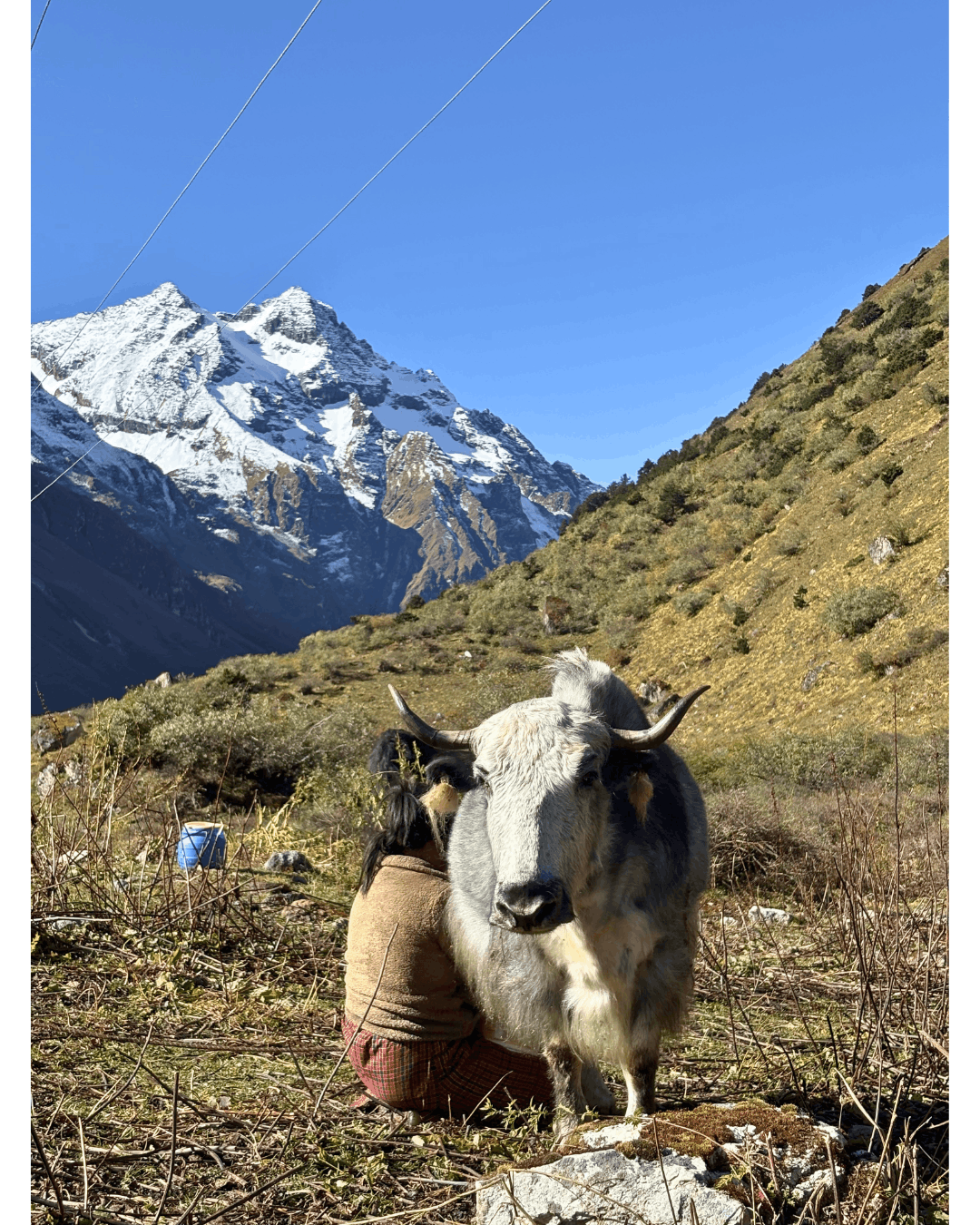
ECONOMIC VIABILITY OF YAK FARMING IN HIGHLAND AREAS OF THIMPHU DZONGKHAG: AN ASSESSMENT OF OPTIMAL HERD SIZE UNDER CHANGING LIVELIHOOD CONDITIONS
Keywords:
Climate change, Cordyceps collection, Economic viability, Highland livelihoods, Human-wildlife conflict, Optimal herd size, Pastoralism, Yak husbandryAbstract
Yak husbandry is a vital source of livelihood for highland communities in Bhutan, deeply rooted in tradition and contributing significantly to local economies, cultures, and ecosystems. This study was conducted to determine the optimal Yak herd size required for household economic viability in Thimphu Dzongkhag. A total of 108 Yak herding households were surveyed across Soe, Naro, Lingzhi, and Dagala Gewogs. The study concluded that the "break-even herd size" based on income–expenditure parity (income ≥ expenditure from Tables 5 and 6), as well as equating annual household income to the mean rural household income, it is approximated that an average of 23 milch Yaks in a herd will sustain the Yak pastoralist household year-round. However, the estimated herd size should be interpreted as a rough proxy, not an optimised herd size. It is derived from descriptive comparisons between mean annual income, expenditure and mean rural household income reported in the Bhutan Living Standard Survey. Dagala Gewog demonstrated the highest average income from Yak husbandry (Nu. 451,797), while other Gewogs relied more heavily on off-farm income sources such as cordyceps harvesting, non-wood forest products, and porter services. The study also observed that Yak herding is predominantly sustained by older, less-educated individuals, with minimal participation from younger generations, denoting a potential future decline of the practice. Productivity indicators, including a mean daily milk yield of 1.05 ± 0.04 kg and a mean lactation length of 183 ± 13 days, were consistent with regional standards. However, variations in bull replacement intervals and breeding management raised concerns about potential inbreeding. Additionally, climate change emerged as a critical stressor, manifesting through glacial retreat, pasture degradation, drying water sources, and increased livestock predation. Around 70% of Yak mortality was attributed to wildlife depredation. Despite these challenges, herders across all Gewogs recognised Yak husbandry as the most reliable and sustainable livelihood option. The study recommends interventions, including human-wildlife coexistence programs, rangeland restoration and management, genetic improvement programs, climate change adaptation strategies, and support that encourages youths’ participation in Yak husbandry to enhance the viability of Yak herding and preserve this essential highland livelihood system.